The Real Reason Your Kid Won't Try New Foods (And the Grocery Store Fix Nobody Talks About)
The Moment Before the Meal Matters More Than You Think
You've tried hiding vegetables in pasta sauce. You've cut things into fun shapes. You've Googled "how to make broccoli taste like something a child will actually eat" more times than you'd like to admit. And still, dinner ends with a standoff and someone going to bed having consumed approximately four bites of buttered noodles.
Here's something that might reframe the whole situation: the battle over new foods is often won or lost before anyone sets foot in the kitchen. The cooking itself — however creative — is almost beside the point. What matters more is what happened in the hours and days before that plate ever hit the table.
Involving picky eaters in the process of choosing food, not just preparing it, is one of the most quietly powerful shifts a family can make. And the grocery store is where a lot of that magic can actually start.
Why Ownership Changes Everything
There's a well-documented psychological principle at play here called the "IKEA effect" — the idea that people place higher value on things they've had a hand in creating or selecting. Researchers have found this applies to food too. When kids (and honestly, adults) feel like they've had some agency over what ends up on the table, they're significantly more likely to approach it with curiosity rather than suspicion.
Think about it from your kid's perspective. A plate of roasted Brussels sprouts that just appears in front of them is an ambush. But a bag of Brussels sprouts that they picked off the produce shelf, maybe after sniffing them or feeling how dense they are, is something entirely different. It's theirs now. They have a relationship with it.
This isn't about tricking kids. It's about giving them a genuine stake in the meal.
Making the Grocery Store a Gateway, Not a Gauntlet
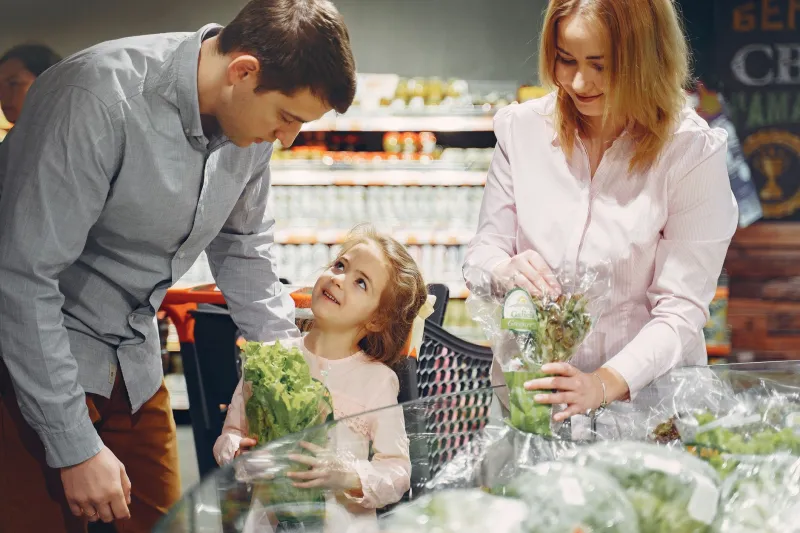
For a lot of families, bringing kids to the grocery store feels like a logistical nightmare — extra time, extra noise, extra snacks requested from every aisle. But reframing the trip as a food exploration mission rather than an errand can completely change the energy.
A few approaches that actually work:
Give them one real choice. Before you head to the store, tell your child they get to pick one vegetable or one new ingredient for the week. It doesn't have to be exotic — a different variety of apple, a new type of mushroom, or a grain they've never heard of counts. The key is that the choice is genuinely theirs, not steered by you.
Let them be the expert on something. Ask your kid to find the ripest avocados, or to figure out which tomatoes smell the best. This gives them a job, a sense of competence, and — without them realizing it — a much closer look at produce they might otherwise ignore entirely.
Talk about the food like it's interesting, not like it's medicine. Instead of "this is good for you," try "I wonder what this would taste like roasted" or "have you ever seen one of these before?" Curiosity is contagious. If you treat unfamiliar ingredients as genuinely intriguing rather than nutritionally obligatory, kids tend to pick up on that energy.
Shop the farmers market when you can. There's something about buying directly from the person who grew the food that makes even skeptical kids lean in. Vendors at local markets are often happy to let kids smell, touch, or even sample something. That tactile connection is worth more than a dozen well-intentioned dinner conversations.
Bring the Planning to the Kitchen Table
The involvement doesn't have to stop at the store. Pulling kids into the weekly meal planning process — even in a small way — extends that sense of ownership all the way to dinnertime.
This doesn't mean handing over full menu control (that way lies a week of mac and cheese and chicken nuggets). But something as simple as showing your kid two or three recipe options and letting them choose which one you make on Thursday gives them a voice. They're not just a passive recipient of whatever shows up on their plate. They're part of the decision.
For younger kids, even something like letting them pick which color bell pepper goes into the stir-fry — red, yellow, or orange — creates that same sense of investment. Small choices add up.
For older kids and teenagers, you can go further. Ask them to find a recipe they want to try, or challenge them to pick one ingredient at the store that nobody in the family has cooked before. Make it a low-stakes experiment, not a high-pressure performance.
The Adult Picky Eater Is Real Too
It's worth saying plainly: this isn't just a kid thing. Plenty of adults are resistant to new foods, and the same psychology applies. Spouses or partners who reflexively veto unfamiliar ingredients tend to come around faster when they've been part of the selection process. Asking "what do you want to try this week?" rather than simply presenting a new dish creates a fundamentally different dynamic.
If you've got a mixed table — some adventurous eaters, some not — getting everyone involved in planning can take the pressure off any single meal to be the moment someone "converts." It distributes the discovery across the whole week, the whole month, the whole year.
Lowering the Stakes at the Table
One final piece of the puzzle: even with all the right involvement and ownership in place, new foods can still get rejected. And that's okay. The goal isn't a clean plate on the first try. The goal is a family that keeps showing up curious.
When a kid has picked out an ingredient themselves and then decides they don't love it cooked a particular way, that's not failure — that's information. Ask them how they'd want to try it next time. Maybe they want it raw instead of cooked. Maybe they want it in a soup instead of roasted. Keeping the conversation open keeps the door open.
The table is supposed to be a place where your family comes together, and that includes coming together around the process of figuring out what everyone actually likes. The grocery store, the planning session, the recipe scroll on a Sunday afternoon — all of it is part of the meal. Start there, and the cooking almost takes care of itself.