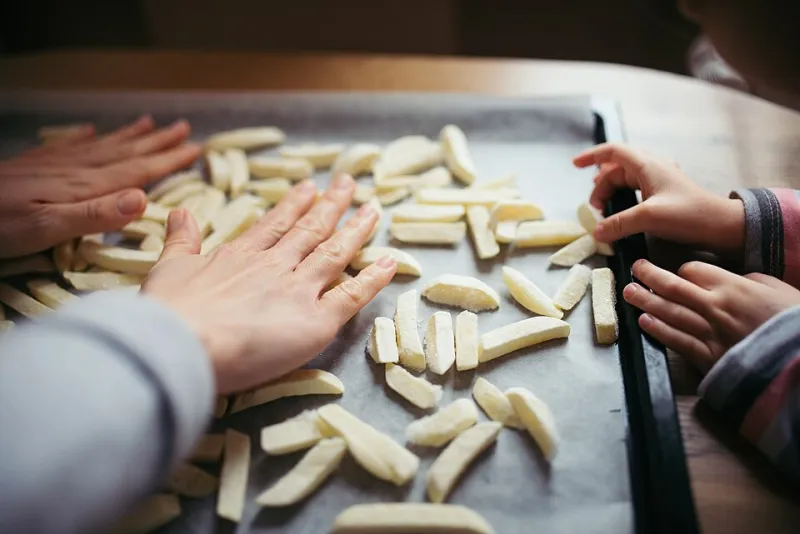
Let Them Cook: How to Help Your Child Pull Off Their Very First Real Meal
Photo: Unknown photographer, Public domain, via Wikimedia Commons
At some point, almost every kid announces they want to cook dinner. Maybe they've been watching you do it their whole life. Maybe a friend mentioned they made pasta at home. Maybe they just want to feel capable of something real. Whatever the spark, that moment is worth taking seriously—because a child who learns to cook a complete meal from scratch gains something that goes way beyond food.
They learn to plan. They learn to problem-solve. They learn that mistakes are fixable. And they learn that feeding people you love is one of the most satisfying things a person can do.
This guide is for parents who want to support that milestone the right way—not by doing it for them, and not by stepping back so far that things go sideways. It's about finding that balance where your kid is genuinely in charge and genuinely proud of what they made.
First, Figure Out Where Your Kid Is Starting From
Before you pick a recipe or head to the grocery store, take an honest look at what your child already knows how to do in the kitchen. A ten-year-old who's been cracking eggs and stirring batter since kindergarten is in a very different place than one who's never held a chef's knife.
This isn't about gatekeeping—it's about setting them up to succeed. A first solo meal should be challenging enough to feel meaningful but achievable enough that they finish it feeling proud, not defeated.
Ages 6–8: Focus on meals with minimal heat and simple assembly. A build-your-own taco bar where they prep the toppings, or a hearty sandwich spread with a side of fruit salad they chop themselves, is genuinely impressive at this age and completely within reach.
Ages 9–11: This is a great age for stovetop basics. Scrambled eggs and toast with a simple side salad, homemade quesadillas, or a basic pasta with jarred sauce (elevated with sautéed garlic and vegetables they prepped) are all excellent first full meals.
Ages 12–14: Older kids can take on more complexity—a sheet pan chicken dinner, homemade soup from scratch, or a stir-fry with rice. These meals require more timing and multitasking, which is exactly what builds real kitchen confidence.
Ages 15+: At this point, the sky's the limit in terms of technique. The goal shifts more toward independence—can they plan, shop, cook, and clean up largely on their own?
Start at the Grocery Store, Not the Stove
One of the biggest mistakes parents make when teaching kids to cook is skipping the planning stage. Cooking a real meal starts long before you turn on the burner—it starts with figuring out what you need and where to get it.
Take your child to the grocery store as part of the process. Help them read the recipe, make a list, and find the ingredients themselves. Let them check prices, compare options, and make small decisions ("Should we get cherry tomatoes or regular?" is a perfect kid-sized choice). This stage teaches them that cooking is a whole sequence of decisions, not just a moment at the stove.
It also slows everything down in the best way. A kid who has personally picked out the chicken thighs or chosen the fresh basil is far more invested in what ends up on the plate.
Setting Up for Success Before the First Chop
Professional cooks call it mise en place—everything in its place before you start cooking. For kids making their first meal, this concept is non-negotiable.
Before anything gets turned on or cut up, sit down together and walk through the whole recipe once. Talk through each step. Identify anything that might be confusing or tricky. Then set out all the ingredients, tools, and equipment they'll need before they begin.
This does two things: it reduces mid-cook chaos (the scramble for a colander when the pasta is already boiling over), and it gives your child a mental map of the whole meal before they start. That overview makes a huge difference in their confidence.
Your Job: Present but Not Hovering
This is the hardest part for most parents. Your instinct is to help—to grab the pan when the oil starts smoking, to quietly fix the seasoning, to take over when things get slow. Resist it.
Your role during your child's first solo meal is to be a resource, not a co-pilot. That means:
- Answer questions when asked, don't anticipate every problem. Let them run into small obstacles and figure them out.
- Stay nearby for genuine safety issues. You should absolutely step in if something is about to cause a burn or a real mess—but a slightly uneven dice or an imperfect sauce doesn't qualify.
- Narrate instead of correcting. Instead of "That's too much salt," try "How does it taste to you? What do you think it needs?" You're building a cook, not just a recipe-follower.
Common Mistakes (and How to Handle Them Gracefully)
Something will go wrong. That's not pessimism—it's just cooking. Here's how to handle the most common kid-cook mishaps without derailing the whole experience:
Over-salted food: Add a starch (more pasta, a potato cooked in the soup) or a splash of acid like lemon juice to balance it out. Frame it as a fix, not a failure.
Undercooked protein: This is where your safety instincts should kick in gently. Teach your child how to check for doneness using a meat thermometer—it's a skill worth learning early, and it removes guesswork.
Timing issues (everything finishing at different times): This is incredibly common and completely normal. Help them understand which components can wait and which can't—pasta can sit, but sautéed spinach really can't.
Burned garlic: It happens to everyone. Show them how to start over quickly and explain why garlic burns so fast. Turn it into a lesson, not a shame spiral.
Make the Meal a Real Event
When your child's first solo dinner is ready to serve, treat it like the milestone it is. Set the table properly. Sit down together. Let them be the one to bring the food out.
And then—this part matters—actually talk about what they made. Not just "this is great!" (though say that too), but ask them what was hardest, what they'd do differently, what they're most proud of. That reflection is where a lot of the learning actually lands.
Some families make a tradition of this: the first time a kid cooks a full meal gets written in a notebook, or photographed, or celebrated with a small "chef's badge" moment. It doesn't need to be elaborate. It just needs to be acknowledged.
The Long Game
One meal doesn't make a cook. But it starts something. A kid who has successfully fed their family—who has planned, shopped, cooked, and served a real dinner—knows something about themselves that they didn't know before. They know they can do hard things. They know the kitchen is a place that belongs to them too.
That's worth every slightly lopsided chop and every over-boiled pot of water along the way.