Burnt, Oversalted, and Totally Worth It: What Kitchen Disasters Are Really Teaching Your Family
It starts innocently enough. Someone gets a little heavy-handed with the salt shaker. The oven timer gets ignored for ten minutes too long. A substitution that seemed totally reasonable—Greek yogurt for butter, sure, why not—turns a birthday cake into a dense, sad brick. And just like that, dinner is a disaster.
Most families hit that moment and reach for the takeout menu. Totally understandable. But here's the thing: those ruined meals? They're quietly doing some of the most important work your family kitchen will ever do.
The Perfect Meal Doesn't Teach Anyone Anything
When everything goes right in the kitchen, it's wonderful. Dinner lands on the table hot, seasoned just right, and everyone eats happily. But nobody grows from that experience. Nobody has to think on their feet, adapt, or figure anything out. It's a smooth ride from start to finish—and smooth rides don't build much.
Failed recipes are a different story entirely. The moment something goes sideways, everyone in that kitchen has to engage. Why did this happen? What do we do now? Can we save it? Is there something else we can make with what we have? That's real-time problem-solving, and it's genuinely valuable—not just for cooking, but for life.
Research on learning through failure backs this up. Psychologists have long pointed to what's sometimes called "productive struggle"—the idea that working through difficulty, rather than avoiding it, builds deeper understanding and stronger resilience. Your kitchen, it turns out, is one of the best classrooms around for exactly that kind of struggle.
Kids Learn More From the Mess Than the Success
For children especially, cooking failures are gold. When a kid helps make something that doesn't turn out right, a few really important things happen.
First, they see that adults fail too. That's huge. So much of a child's world is built around watching grown-ups do things correctly—driving a car, managing money, filling out forms. The kitchen is one of the rare places where parents visibly mess up in real time, and that normalizes imperfection in a way that's hard to replicate anywhere else.
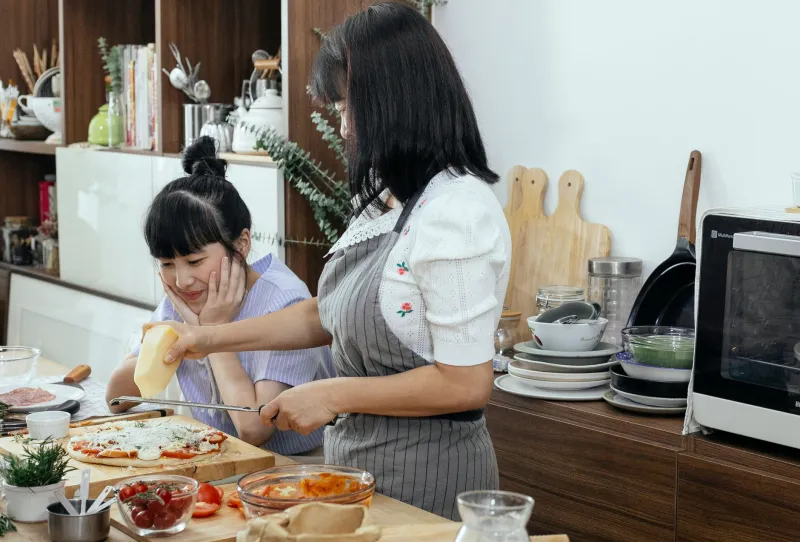
Second, kids get to participate in the recovery. Maybe the soup is too salty, but adding a peeled potato and letting it simmer for a while pulls some of that saltiness out. Maybe the cake sank in the middle, but slicing it up and layering it with whipped cream and berries turns it into a trifle. Watching a parent pivot without panicking—and then inviting the kid to help with the fix—teaches flexibility and creative thinking in a way no worksheet ever could.
Third, and maybe most importantly, it gives kids permission to try things they're not sure about. When the message in the kitchen is "mistakes are okay and we'll figure it out together," children become more willing to experiment, take risks, and push past the fear of getting something wrong. That confidence doesn't stay in the kitchen—it follows them everywhere.
How to Actually Reframe the Disaster in the Moment
None of this works if the kitchen becomes a stressful place when things go wrong. The reframe has to be genuine, and it has to happen in real time.
When something burns or flops, your reaction sets the tone for everyone else in the room. A dramatic sigh, a sharp comment, or an immediate pivot to frustration sends a clear message: failure is bad, and we don't handle it well here. But a laugh, a curious "huh, what happened?" or a casual "okay, let's see what we can do" sends the opposite message—and your kids are watching every second of it.
Try narrating your thought process out loud. "The batter looks too thin—I think I measured the milk wrong. Let me add a little more flour and see if that helps." That running commentary turns your mistake into a live tutorial, and it shows kids that problem-solving is a process, not an instinct you either have or you don't.
If the dish genuinely can't be saved, make that part of the story too. Toss the burnt cookies together, order a pizza, and sit around the table laughing about what went wrong. Those meals—the chaotic ones, the accidental ones—tend to be the ones families remember the longest.
The Dishes That Didn't Work Out Are Part of Your Family Story
Every family with a real cooking history has a disaster legend. The Thanksgiving turkey that was still frozen in the middle at noon. The chili that was so spicy nobody could finish a bowl. The birthday cake that slid off the plate on the way to the table. These stories get told at every holiday, every reunion, every time the family gets together around food.
That's not a coincidence. Shared failure creates shared memory in a way that shared success rarely does. It's the moments when things went sideways—and you all got through it together—that bond a family around a table in a way that a perfectly executed dinner just can't match.
Start treating your kitchen disasters like the heirlooms they actually are. Write them down in the back of your recipe notebook. Tell them to your kids when they're old enough to appreciate the absurdity. Let them become part of the texture of your family's food story, because that's exactly what they are.
Practical Ways to Build a Kitchen Culture That Welcomes Failure
If your household tends to run high-stakes around cooking—where mistakes lead to stress or embarrassment—it takes a little intentional effort to shift the culture. A few things that actually help:
Give kids ownership of a meal, start to finish. When a child chooses the recipe, does the prep, and handles the cooking (with supervision appropriate to their age), they're invested in the outcome. If it doesn't work, they're also invested in figuring out why—and that's exactly the engagement you want.
Try a "kitchen experiment night" once a month. Pick a dish nobody's made before, or let a kid choose something ambitious. Go in knowing it might not be perfect. That framing removes pressure and opens the door to genuine exploration.
Talk about your own cooking failures from the past. Tell the story of the first time you tried to make homemade bread and ended up with a doorstop. Describe the soup you over-seasoned so badly you had to throw the whole pot out. Your kids love hearing that you've been where they are—and it makes the kitchen feel like a safer place to try things.
Celebrate the save as much as the success. When someone figures out how to rescue a dish that was headed south, make a big deal of it. That's real cooking skill, and it deserves recognition.
The Kitchen Is Where Your Family Learns to Be Okay With Imperfect
In a world that's increasingly focused on polished outcomes and highlight-reel results, the kitchen is one of the last places where imperfection is not only acceptable but genuinely useful. The burnt edges, the sunken centers, the accidental over-spicing—all of it is data. All of it is experience. And all of it is building something in your family that goes way beyond the ability to cook a good meal.
The families who cook together through the failures—not just the successes—are building something real. They're building trust, adaptability, and a shared history full of the kind of moments that actually matter. So next time something goes sideways in your kitchen, take a breath, look around at your people, and remember: this is the good stuff.