One Kitchen, Four Generations: Making Meals Work When Everyone's Needs Are Different
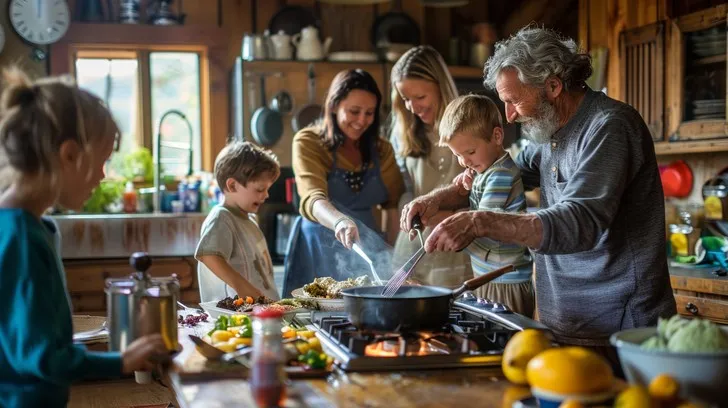
Photo: multi-generational family cooking dinner together in kitchen grandparents children, via images.stockcake.com
The numbers don't lie: multi-generational living is back in a big way. According to Pew Research, tens of millions of Americans now live in households with at least two adult generations under one roof—and many of those homes include grandparents, parents, and young children all sharing the same refrigerator, the same stove, and the same dinner table.
It sounds lovely in theory. In practice, it can feel like running a small restaurant where the menu changes based on who's sitting down. You've got a four-year-old who won't eat anything that touches, a teenager who's decided to go vegetarian, two working adults who want something fast and filling, and an aging parent managing blood pressure who needs to watch their sodium. Every single night.
Families doing this well aren't cooking separate meals for everyone. They've figured out a smarter system—and most of it comes down to flexibility, communication, and a cooking strategy called the component meal.
The Component Meal: Your Multi-Generational Best Friend
The component meal is exactly what it sounds like: instead of plating one finished dish for everyone, you build dinner from modular parts that people assemble themselves. Think taco bars, grain bowls, pasta nights with separate sauce options, or a roasted protein alongside several vegetable sides and a starch.
Every person at the table gets what they need without anyone cooking five separate things. The toddler gets plain rice, shredded chicken, and steamed broccoli. The teenager builds a vegetarian bowl with chickpeas and roasted sweet potato. Grandma skips the soy sauce and loads up on the unseasoned components. The adults grab a little of everything and call it done.
This isn't a compromise where nobody's happy. It's a structure where everyone gets something that actually works for them, built from the same base ingredients you prepped once.
Designate a Weekly Kitchen Meeting (Seriously)
It sounds overly formal, but even a ten-minute Sunday check-in about the week's meals can dramatically reduce the daily stress of feeding a multi-generational household. Who's home which nights? Does Dad have a cardiology appointment and need something light on Tuesday? Is the teenager going to a friend's house Thursday?
Knowing this in advance means you're not scrambling at 5:30 PM trying to figure out what works for seven different schedules and six different sets of dietary needs. A simple shared note on the fridge or a group chat thread works fine—nothing fancy required.
This also opens the door for everyone to have some input. Let the grandparents suggest a dish from their past. Let the kids vote on one meal per week. When people feel heard in the planning stage, they tend to be more flexible at the table.
Batch Cooking With Customization Built In
Weekend batch cooking is a lifesaver in any busy household, but in a multi-generational home, the key is prepping components rather than complete dishes. Cook a big pot of plain grains—brown rice, farro, or quinoa. Roast a sheet pan of vegetables without heavy seasoning so they can be used multiple ways. Cook a large batch of protein that can be served simply for those with restrictions and dressed up for everyone else.
This approach respects different dietary needs without requiring a different cook session for each person. Grandpa's low-sodium requirements are handled by keeping the seasoning on the side. The kids get familiar, simple flavors. The adults can add heat, sauces, or extras to make their plate feel more interesting.
Having a well-stocked fridge of plain, versatile components also means anyone in the household—including older kids or the grandparents themselves—can put together a meal without much help. That independence matters, especially for aging family members who want to contribute without being overwhelmed.
Bring the Kids Into the Process Early
Multi-generational kitchens are actually ideal spaces for kids to learn cooking, because there are more adults around to guide them safely. A grandparent who loves to bake is an incredible resource for a curious eight-year-old. A teenager who's interested in food can take on real responsibility—like managing one component of dinner each week—with appropriate supervision from whoever's nearby.
When kids have a hand in making the meal, they're also more likely to eat it. That's not a theory; most parents have lived it. The four-year-old who helped wash the lettuce is way more interested in the salad than the one who was just handed a plate.
Assigning age-appropriate tasks also distributes the kitchen labor more evenly across the household, which is a genuine relief when you're cooking for a crowd every night.
Honor the Food Traditions in the Room
One of the real gifts of multi-generational living is that you have access to a living archive of family food knowledge. Grandparents carry recipes in their heads that have never been written down. They know techniques that cookbooks don't cover. They have opinions about the right way to make Sunday gravy, and those opinions are worth hearing.
Make space for those traditions, even when they don't fit neatly into the week's dietary constraints. Maybe Grandma's pot roast gets made once a month, and everyone adjusts around it. Maybe the low-sodium version of her soup becomes the new family recipe. Honoring what someone brings to the table—literally and figuratively—goes a long way toward making a shared home feel like a shared home.
Give Everyone a Role, Not Just a Seat
The households that manage multi-generational cooking most successfully tend to have one thing in common: everyone participates in some way. The grandparent who can no longer stand for long periods might handle meal planning or grocery list organization. The teenager does dishes. The youngest kids set the table. The working adults handle the actual cooking on weeknights.
No one person carries the whole thing. And the kitchen, rather than becoming a source of stress and resentment, stays what it's supposed to be—the place where your family actually comes together.
It takes some coordination to get there. But once you find your rhythm, feeding four generations from one kitchen stops feeling impossible and starts feeling like exactly the kind of life you wanted when you decided to share a home.